

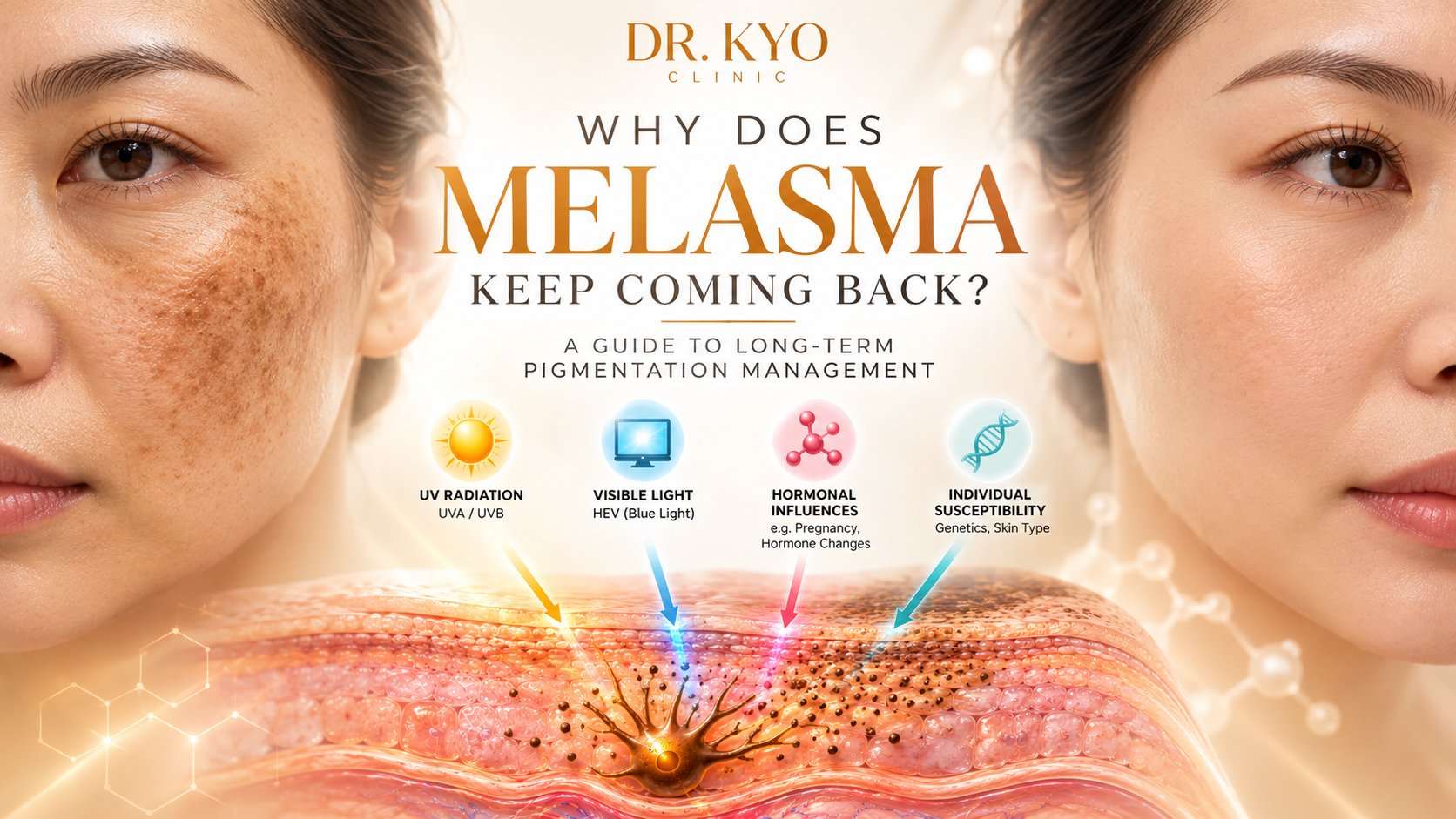
Melasma is more than a surface pigmentation concern. It is a complex, chronic skin condition influenced by multiple biological and environmental factors.
Many people notice their pigmentation becoming lighter after treatment, only to see it gradually return. Understanding why this happens is the first step towards a more sustainable management approach.
At Dr Kyo Clinic, we believe effective pigmentation management begins with understanding the skin, supporting its barrier and addressing contributing factors—not simply targeting visible dark patches.
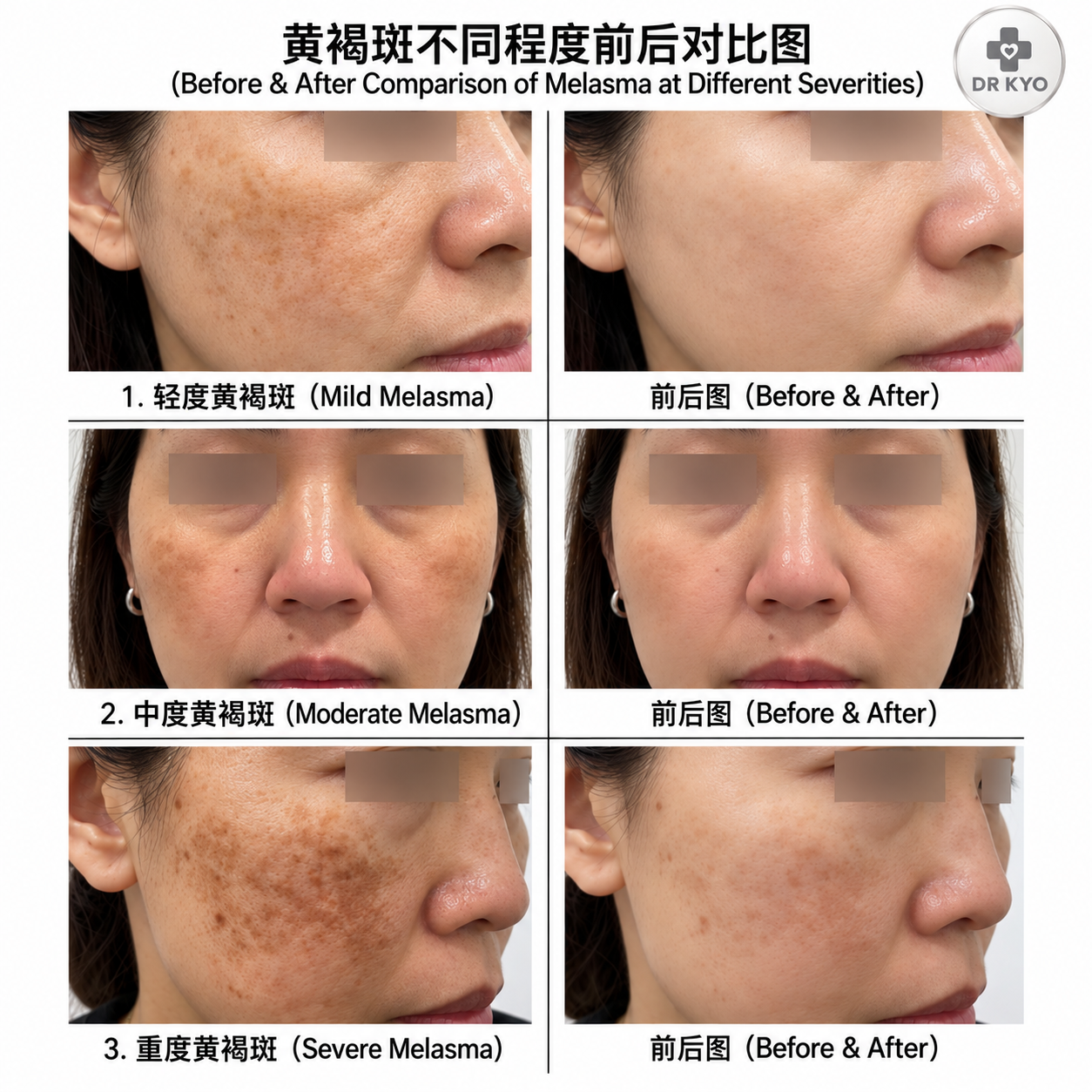
Illustrative Images Only
These images are for educational purposes only. They do not represent actual patient photographs or treatment results. Melasma presentation and treatment outcomes vary between individuals.
1. Melasma Is More Than a Surface Pigment Problem
Melasma involves overactive pigment-producing cells called melanocytes. These cells produce melanin, which gives skin its colour.
Several factors can stimulate pigment production, including ultraviolet radiation, visible light, hormonal influences and individual susceptibility.
This is why treating visible pigmentation alone may not be enough to achieve long-term control.
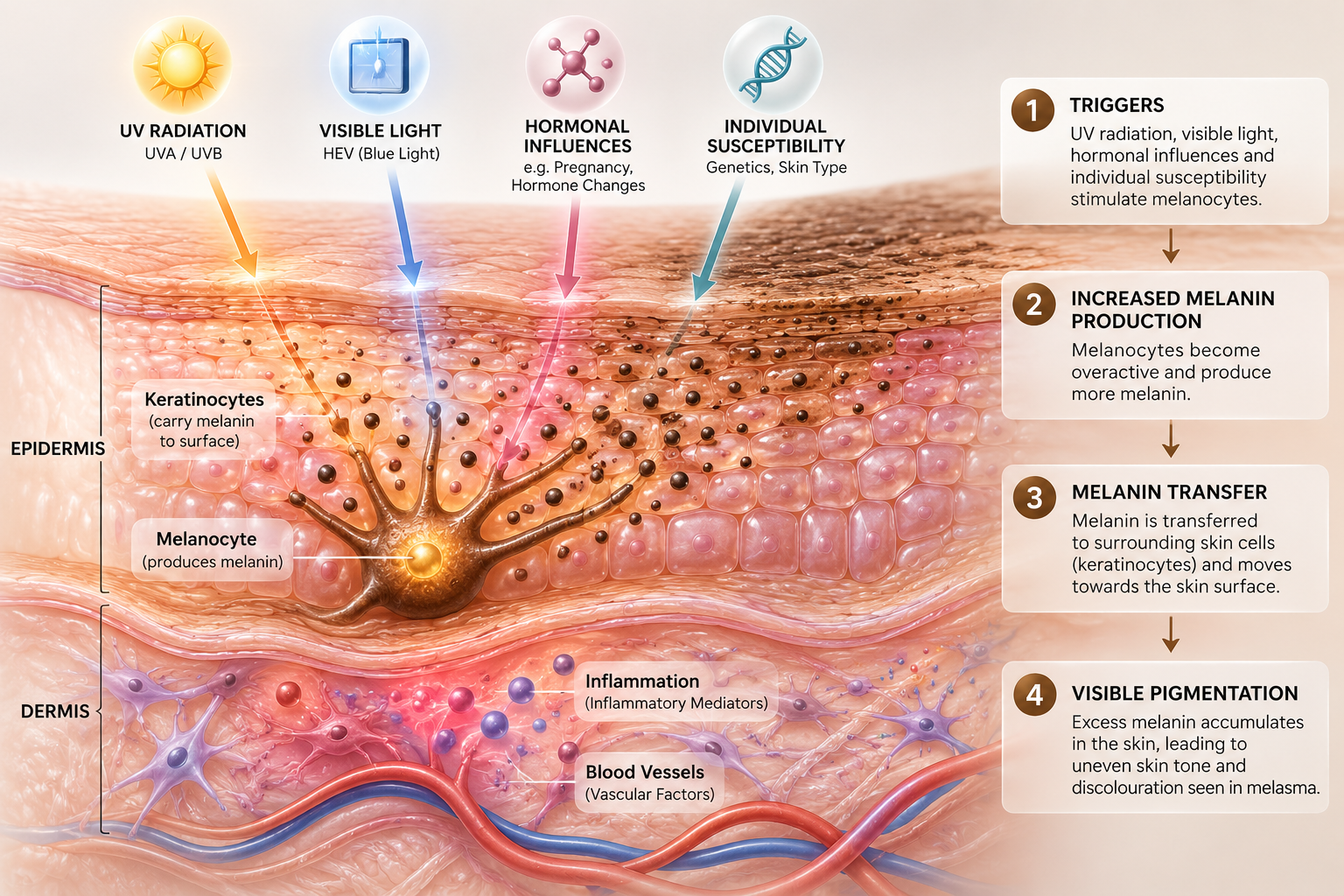
HOW MELASMA DEVELOPS
Melanocytes are pigment-producing cells located in the epidermis. They produce melanin, which gives skin its colour.
UV radiation, visible light, hormonal influences and individual susceptibility can contribute to increased pigmentation. Melanin is transferred to surrounding skin cells, where excess pigment can become visible as uneven skin tone.
Why this matters: Melasma is a complex, chronic condition. Managing visible pigmentation may require a personalised approach that addresses contributing factors, protects the skin and supports long-term maintenance.
Scientific illustration for educational purposes only. It does not represent an actual patient’s skin.
2. Sun Exposure and Heat Can Trigger Pigmentation
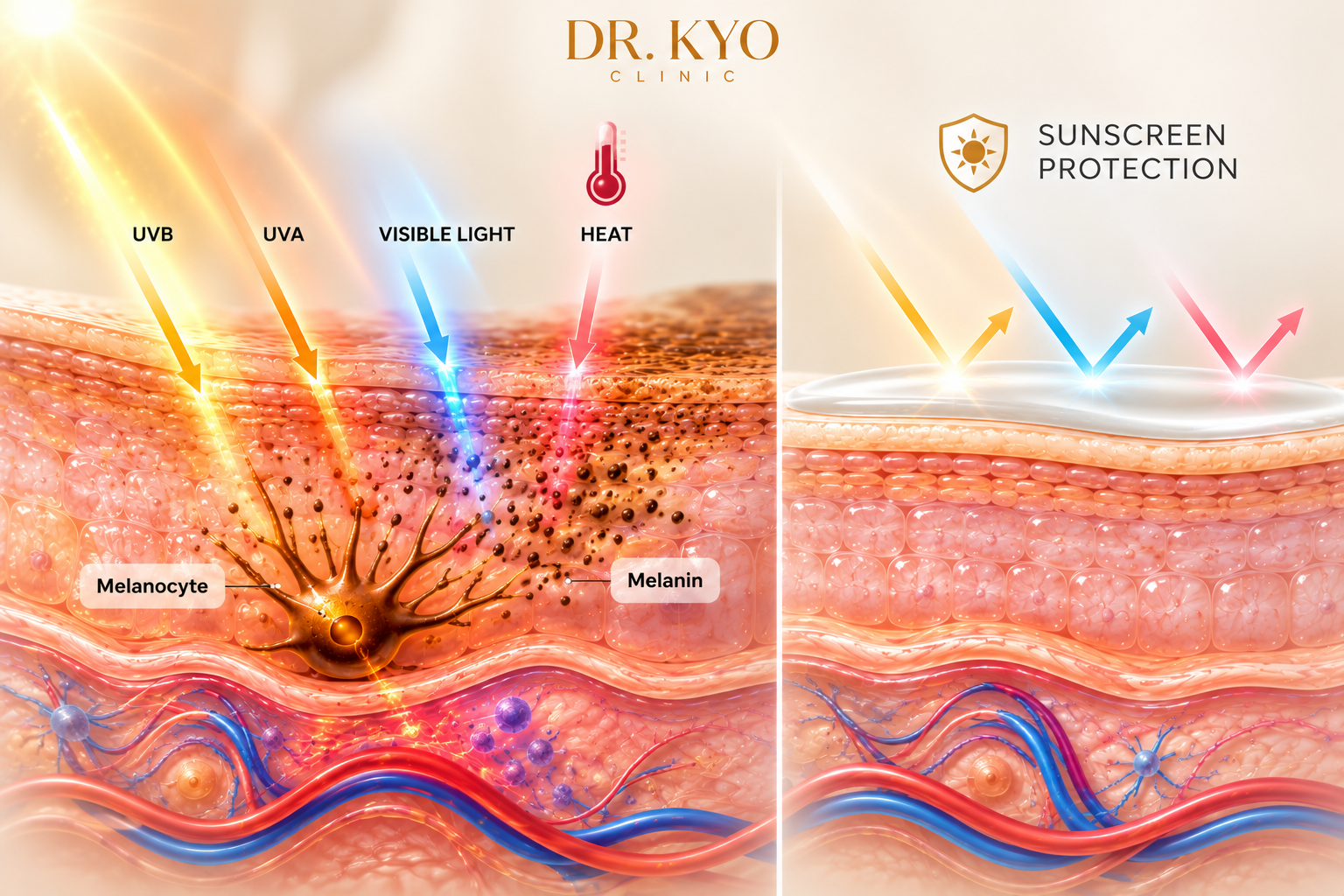
Sunlight is one of the most important factors associated with melasma. Ultraviolet radiation and visible light can worsen pigmentation in susceptible skin.
Daily sun protection is essential, even when the weather is cloudy or you spend much of your day indoors near bright windows.
Choose a broad-spectrum sunscreen and reapply as directed, particularly when spending time outdoors. A tinted sunscreen containing iron oxides may provide additional protection against visible light.
Heat may also aggravate melasma in some individuals, although its role varies from person to person.
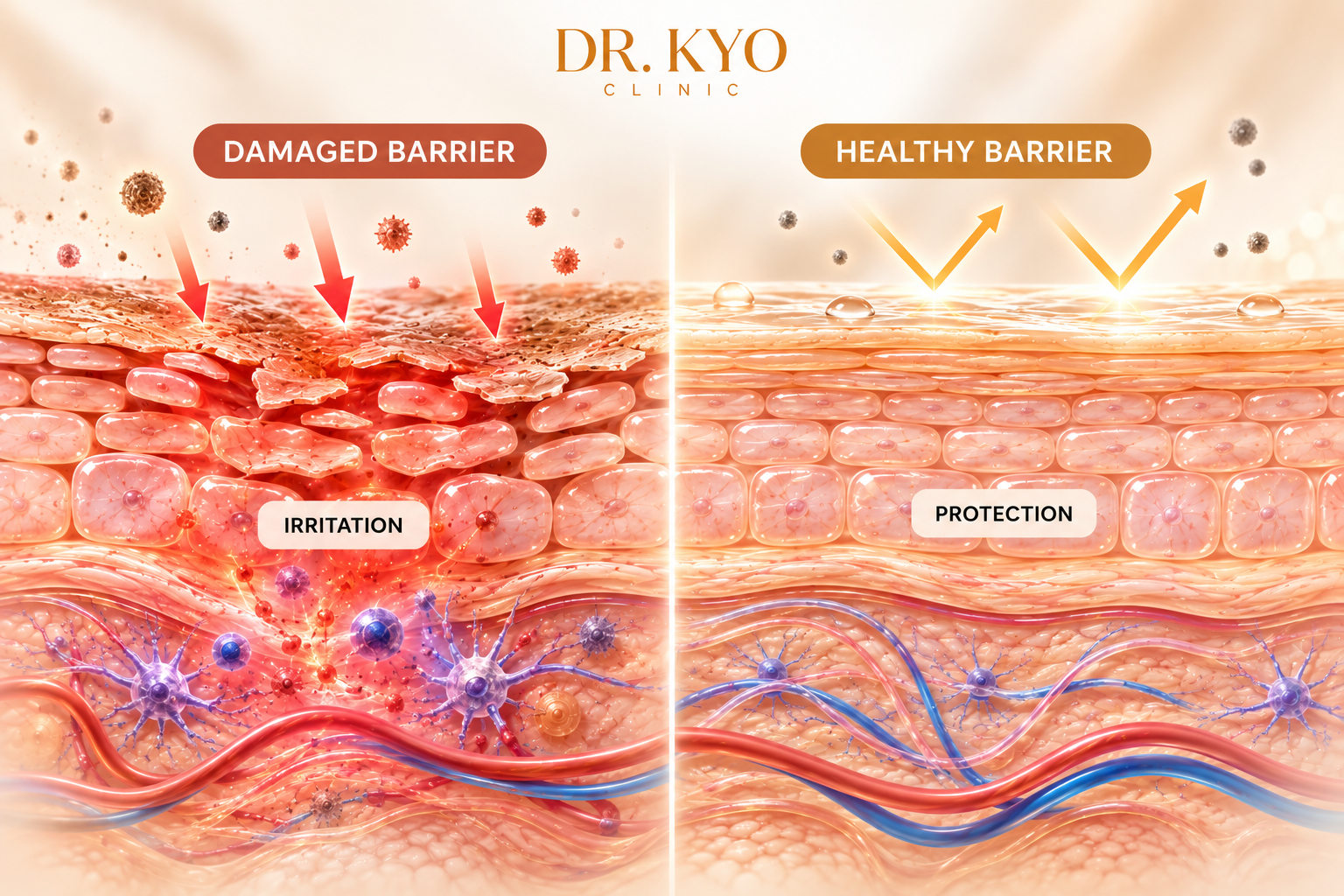
3. Skin Barrier Health Matters
When the skin becomes irritated by excessive exfoliation, unsuitable products or aggressive treatments, redness and inflammation may develop.
Inflammation can contribute to post-inflammatory hyperpigmentation, especially in Asian skin.
A carefully selected skincare routine should support the skin barrier while addressing pigmentation. More products and stronger ingredients do not necessarily produce better results.
4. Treatment Needs a Long-Term Strategy
Melasma management often requires a combination of approaches rather than a single treatment.
A personalised plan may include:
– Repair: Support skin barrier function and reduce unnecessary irritation.
– Remove: Use appropriate pigment-targeting skincare or professionally selected procedures when indicated.
– Renew: Maintain results through sun protection, suitable home care and regular reassessment.
At Dr Kyo Clinic, this approach reflects our principle: rebuild comes before brightening.
Not every patient needs the same treatment. Lasers and other aesthetic procedures should be selected carefully because inappropriate treatment can aggravate pigmentation in some cases.
5. Consistency Is More Important Than Aggression
A common mistake is switching products frequently or using several strong active ingredients at the same time.
Ingredients such as retinoids and selected pigment-modulating agents may be useful for appropriate patients, but they can also cause irritation if used incorrectly.
Introduce active ingredients gradually and seek professional advice if persistent redness, burning or peeling occurs.
6. Maintenance Is Part of Treatment
Melasma can improve significantly, but recurrence is common. There is currently no guaranteed permanent cure.
After an initial improvement, continued sun protection, appropriate skincare and periodic professional review can help maintain results and identify early changes.
The goal is not simply to make pigmentation disappear temporarily. It is to develop a sustainable management plan that respects your skin’s condition and long-term needs.
How Can Dr Kyo Clinic Help?
At Dr Kyo Clinic, we assess pigmentation patterns, skin condition, lifestyle factors and previous treatment history before recommending a personalised management plan.
Our approach may combine medical-grade home care with selected professional treatments when clinically appropriate.
If your pigmentation keeps returning, consider a professional skin assessment to better understand your condition and the options available to you.
Dr Kyo Clinic — Personalised Skin Management. Rebuild Before Brightening.
This article is for educational purposes and does not replace an individual medical consultation. Treatment suitability and outcomes vary between individuals.